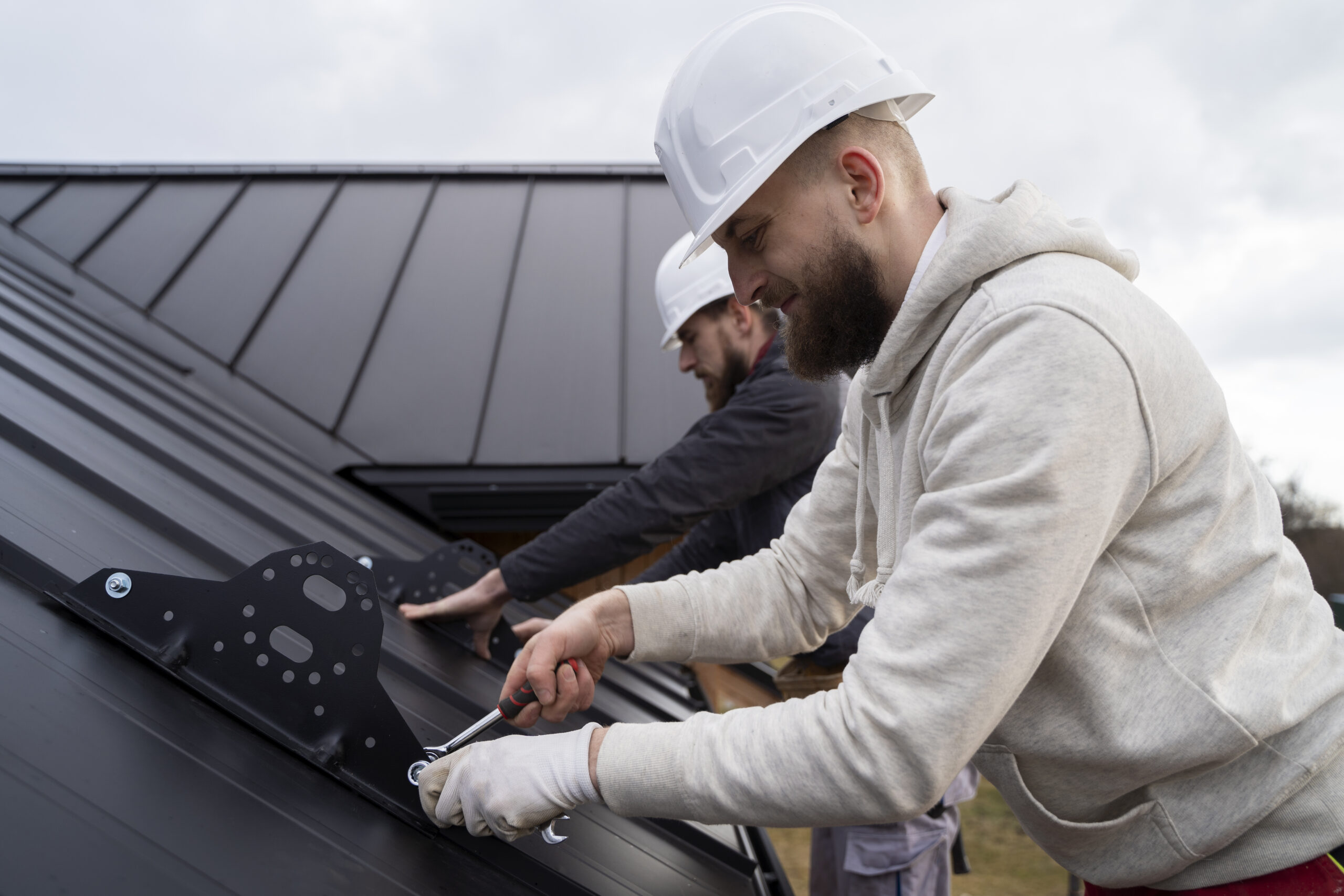
What Is the Commercial Roof Installation Process?
First-person professional introduction
I have spent more than ten years working on commercial roofing projects across Melbourne, from small industrial warehouses in Thomastown to multi-storey retail precincts in Southbank and Docklands. Over that time, I’ve noticed one consistent pattern: most business owners believe installing a commercial roof is simply a larger version of installing a house roof. In reality, the commercial roof installation process is a complex construction project involving structural engineering, Victorian compliance regulations, logistical planning and post-installation certification.
When this process is rushed or poorly managed, I regularly see roofs fail in under five years. When it is done properly, a commercial roofing system can protect a building for more than three decades. This article explains, step-by-step, how professional commercial roof installations are actually delivered in Melbourne.
Table of Contents
- Stage 1 – Initial Feasibility & Condition Assessment
- Stage 2 – Structural Evaluation & Engineering Certification
- Stage 3 – System Design & Material Selection
- Stage 4 – Compliance Planning & WorkSafe Documentation
- Stage 5 – Site Logistics & Access Planning
Stage 1 – Initial Feasibility & Condition Assessment
Every commercial roofing project begins with a feasibility study. This is not a sales visit – it is a technical inspection designed to determine whether the existing roof structure can safely support a new system.
During this phase, we carry out:
- Moisture scanning to locate trapped water beneath membranes or metal sheeting.
- Core sampling to determine insulation type, thickness and condition.
- Drainage assessments to check box gutters, overflows and internal downpipes.
- Asbestos risk evaluation, particularly in buildings constructed prior to 1990.
In Melbourne’s inner-north suburbs such as Brunswick and Preston, I regularly encounter concealed timber rot beneath steel roofing systems. Without early detection, this hidden damage causes installation budgets to blow out mid-project.
Stage 2 – Structural Evaluation & Engineering Certification
Once the roof condition is understood, a structural engineer must evaluate the building. Commercial roofs are load-bearing systems. They carry HVAC plant, solar arrays, access walkways and maintenance foot traffic.
The engineering process assesses:
- Dead load limits of existing framing.
- Live load capacity for rooftop equipment.
- Wind uplift resistance under AS1170 standards.
- Deflection tolerances for membrane systems.
On a recent logistics facility upgrade in Truganina, we discovered the original framing could not support modern insulated panel roofing without reinforcement. That structural upgrade alone added $48,000 to the project – a cost that would have been catastrophic if discovered mid-installation.
Stage 3 – System Design & Material Selection
This is where the roof stops being a surface and becomes a system. Commercial roofing systems are designed for environment, usage, lifespan and maintenance access.
System design considers:
- Melbourne’s UV intensity and heat reflection requirements.
- Thermal movement allowances between substrates.
- Drainage fall gradients to prevent ponding.
- Noise attenuation in mixed-use buildings.
For example, a cold-storage facility in Laverton will use insulated sandwich panels with vapour-controlled membranes, while a CBD retail centre may require PVC membranes with acoustic matting to reduce rain noise transmission.
Stage 4 – Compliance Planning & WorkSafe Documentation
Before installation begins, Victorian WorkSafe compliance systems are designed. These are not optional – they are mandatory under state law.
This stage includes:
- Safe Work Method Statements for every task.
- Height safety anchor certification.
- Perimeter edge protection and scaffold planning.
- Traffic management permits for road-adjacent sites.
Failure to meet these obligations exposes building owners to prosecution, insurance refusal and major fines.
Stage 5 – Site Logistics & Access Planning
Commercial roofing is as much about logistics as construction. Delivery schedules are mapped, crane zones are designated, and rooftop exclusion areas are created to protect occupants below.
In Melbourne CBD installations, this often involves:
- Night works scheduling.
- Coordination with council for road closures.
- Noise management planning for neighbouring tenants.
Stage 6 – Existing Roof Removal or Overlay Strategy
Once compliance systems are active and access has been established, the project moves into the removal or overlay phase. This stage determines whether the existing roofing system can remain in place as a substrate or whether it must be completely removed.
An overlay strategy is only considered when moisture scans confirm the existing system is dry and structurally sound. Overlaying saves significant labour costs and reduces business disruption, but if trapped moisture is present it will rapidly degrade the new roof from underneath.
Where asbestos sheeting is found — which is still common in factories built before 1990 across suburbs like Coburg, Sunshine and Moorabbin — full removal by licensed asbestos contractors is mandatory. This process is tightly regulated in Victoria and typically adds between $8,000 and $35,000 to project budgets.
Stage 7 – Installation Execution & Staged Works
Commercial roofing is rarely installed in one continuous operation. Projects are broken into zones to ensure businesses can remain operational.
The installation workflow normally follows this sequence:
- Repair or upgrade of structural framing.
- Installation of vapour barriers and insulation layers.
- Mechanical fixing of metal sheeting or bonding of membrane systems.
- Detailing around skylights, vents, HVAC units and parapets.
- Box gutter relining and overflow drainage integration.
Large Melbourne installations often require night works to avoid interrupting trading hours, particularly in retail precincts and medical facilities.
Stage 8 – Waterproofing Integrity Testing
Professional projects never rely on visual inspection alone. Advanced testing is conducted to ensure the roof performs under real-world conditions.
Testing methods include:
- Electronic leak detection mapping.
- Thermal imaging surveys.
- Flood testing of drainage zones.
- Fastener tension audits on metal systems.
These tests are critical in Melbourne where winter rainfall frequently exposes weaknesses in improperly sealed systems.
Stage 9 – Certification, Handover & Warranty Registration
At project completion, the contractor must provide:
- Compliance certificates.
- Engineering sign-off documentation.
- As-built drawings.
- Manufacturer warranty registration.
Without these documents, insurers regularly reject future water-damage claims.
Stage 10 – Post-Installation Maintenance Planning
Commercial roofing is not a set-and-forget asset. Melbourne’s extreme UV exposure, thermal cycling and airborne debris make scheduled maintenance essential.
Typical maintenance programs include quarterly drainage inspections, annual membrane audits and five-year system performance reviews.
Common Commercial Roofing Installation Mistakes
- Skipping moisture detection prior to overlay systems.
- Under-engineering drainage capacity.
- Ignoring thermal expansion allowances.
- Failing to install compliant height-safety infrastructure.
Final Thoughts
The commercial roof installation process is not a simple construction task — it is a regulated, engineered lifecycle investment. Every shortcut eventually becomes a liability.
If you want a Melbourne-based specialist who understands Victorian compliance, climate conditions and long-term asset protection, I strongly recommend contacting Roofing VIC. Their experience delivering complex commercial roofing systems ensures your project is executed correctly from feasibility through to handover.
Contact Us Now for a Free Quote